AgentMail alternatives: compare inboxes, routing and costs

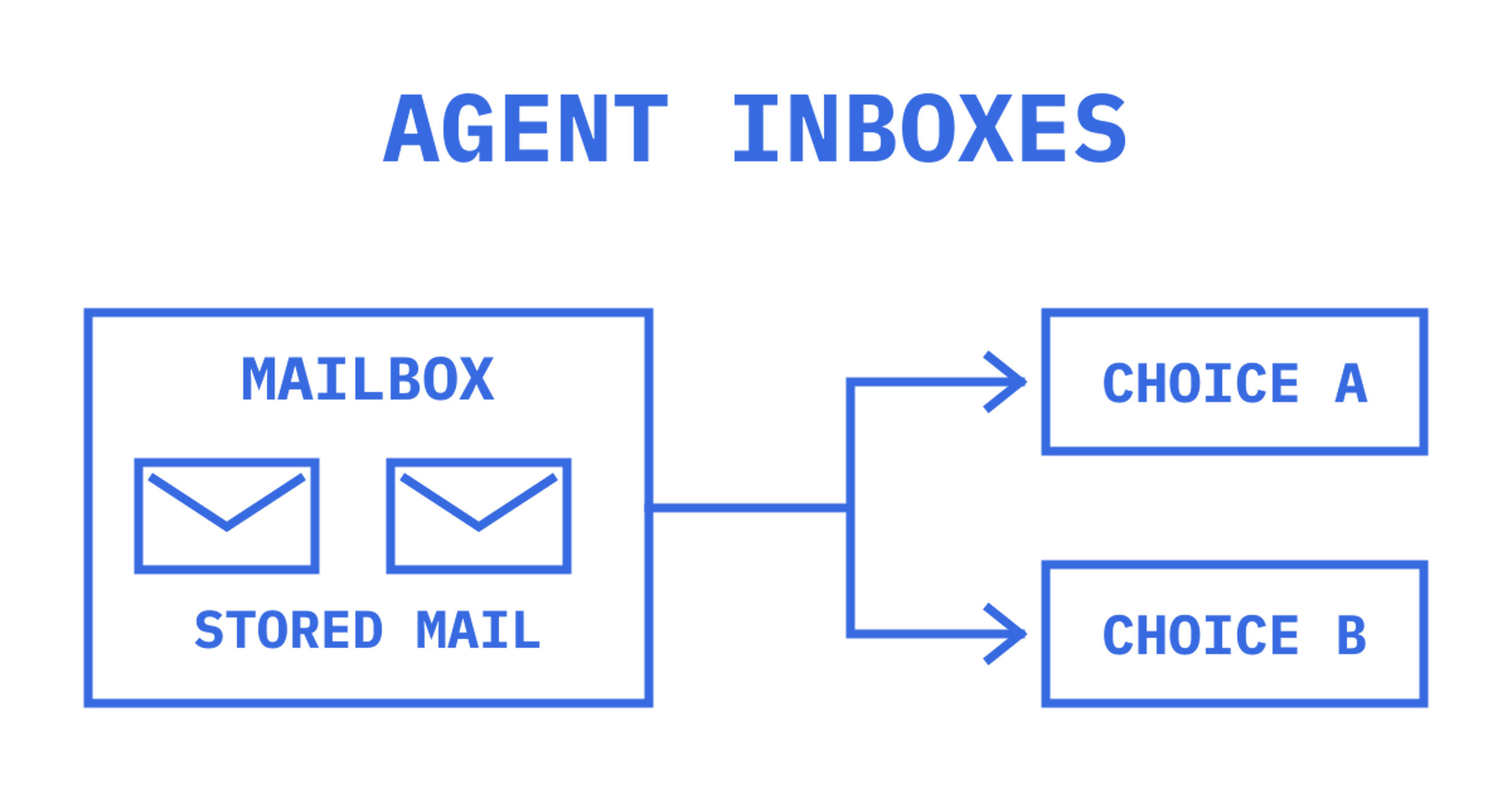
AgentMail alternatives differ in where they keep mailbox state, how they send email and what they charge as your agents multiply. Sendmux is an email API for AI agents and SaaS platforms that combines persistent agent mailboxes with bring-your-own outbound routing. Start by deciding whether you need a hosted inbox, access to an existing user's inbox, or email events that your application will store.
We're Sendmux, so this comparison explains our product alongside the other options. It compares documented capabilities and prices, rather than claiming a performance benchmark or a universal winner.
Best AgentMail alternatives for agent inboxes and mailbox APIs
For persistent agent mailboxes with customer-controlled outbound accounts, consider Sendmux. Nylas covers both connected human accounts and hosted Agent Accounts. Sending and inbound-processing services can also fit, provided your application owns the message history and other state it needs.
AgentMail pricing lists a US$20 monthly Developer plan with 10 inboxes and a US$200 Startup plan with 150. Those aren't the only capacity choices: its capacity add-ons let paid customers add an inbox or domain, or 1,000 monthly sends, for US$2 per month per unit on monthly billing. Annual billing applies a 20% discount. Compare the full allowance and overage model, rather than assuming the eleventh inbox forces an upgrade to Startup.
Sendmux: persistent mailboxes and outbound routing
Sendmux gives an agent or workspace a mailbox with messages, threads, folders and signed webhooks. Outbound sending can use your own Gmail OAuth, Microsoft 365 or SMTP accounts, with delivery groups, weights, quotas and failover. Connecting a sending account doesn't turn that account's existing inbox into a Sendmux mailbox.
Sendmux charges for usage rather than per mailbox on Free and Pro. Free has fixed resource limits, including two mailboxes and one connected sending account. Pro has a monthly team fee plus usage. Mailbox count alone therefore doesn't tell you the bill: include stored data, inbound deliveries, outbound recipients and any charges from your own providers.
Nylas: existing accounts and hosted agent email
Nylas connects applications to existing email and calendar accounts and also offers hosted Agent Accounts. Agent Accounts are generally available. Current plans include 3 accounts on Free, 10 on Essentials at US$15 per month, and 50 on Pro at US$49 per month or US$43 per month billed annually. Pro additional accounts cost US$0.40 per month on monthly billing or US$0.20 on annual billing. Check the Nylas pricing page for usage charges. Keep hosted and connected accounts distinct when evaluating persistence, provisioning and cost. A product that reads a customer's existing Gmail or Outlook account solves a different onboarding problem from one that creates a new address for an agent.
Sending and inbound-processing services
SendGrid, Mailgun, Postmark and Amazon SES are sending services and potential outbound integration targets. Assess their inbound features separately from a persistent agent mailbox. Their sending APIs can be useful without replacing the mailbox and conversation model in your application.
Mailgun offers inbound routes, forwarding and temporary message storage. If you need long-lived mailbox state, plan how your application will retain messages and group conversations. Postmark parses incoming messages into structured webhook payloads and retains message content for retrieval within its retention window. An inbound webhook can power a reply workflow without being a full mailbox API.
Amazon SES provides sending, receiving workflows and reputation metrics. Your application still needs to arrange storage, processing and conversation state for the workflow you want. SES exposes bounce and complaint metrics for monitoring.
Resend provides sending and receiving APIs. Its received-email webhook carries metadata, with full message content available through a separate API request. It also documents threaded replies. Check retention and retrieval requirements directly instead of treating it as send-only or assuming it lacks every form of threading.
Cloudflare Email Service combines inbound Email Routing with outbound transactional sending in beta. Routing messages to application code can suit an event-driven workflow. You still need to decide where the application keeps the conversation state it relies on.
Mailtrap offers a testing sandbox and production email sending. Use the sandbox to inspect test messages, then evaluate its production API separately. Describing the whole product as testing-only would exclude a capability it actually sells.
Other options depend on the job
The similarly named options below are separate products from AgentMail. AGmail advertises inboxes with threading and custom-domain plans, while its documentation is marked as a preview. agentmail.email provides programmatic mailboxes through CLI, REST and MCP, with mailbox and monthly message limits. Verify each product's current storage, security, support and pricing terms before a pilot. A low entry price doesn't establish that a service is unsuitable for production, and a similar name doesn't establish equivalent functionality.
Sequenzy focuses on marketing email and automated campaigns, and also offers transactional sending, reply tracking and a team inbox. If the agent's job is subscriber communication or drip campaigns, evaluate campaign tools alongside the mailbox requirements. A campaign builder and an inbox API answer different parts of that brief.
What changes when an agent needs a persistent mailbox?
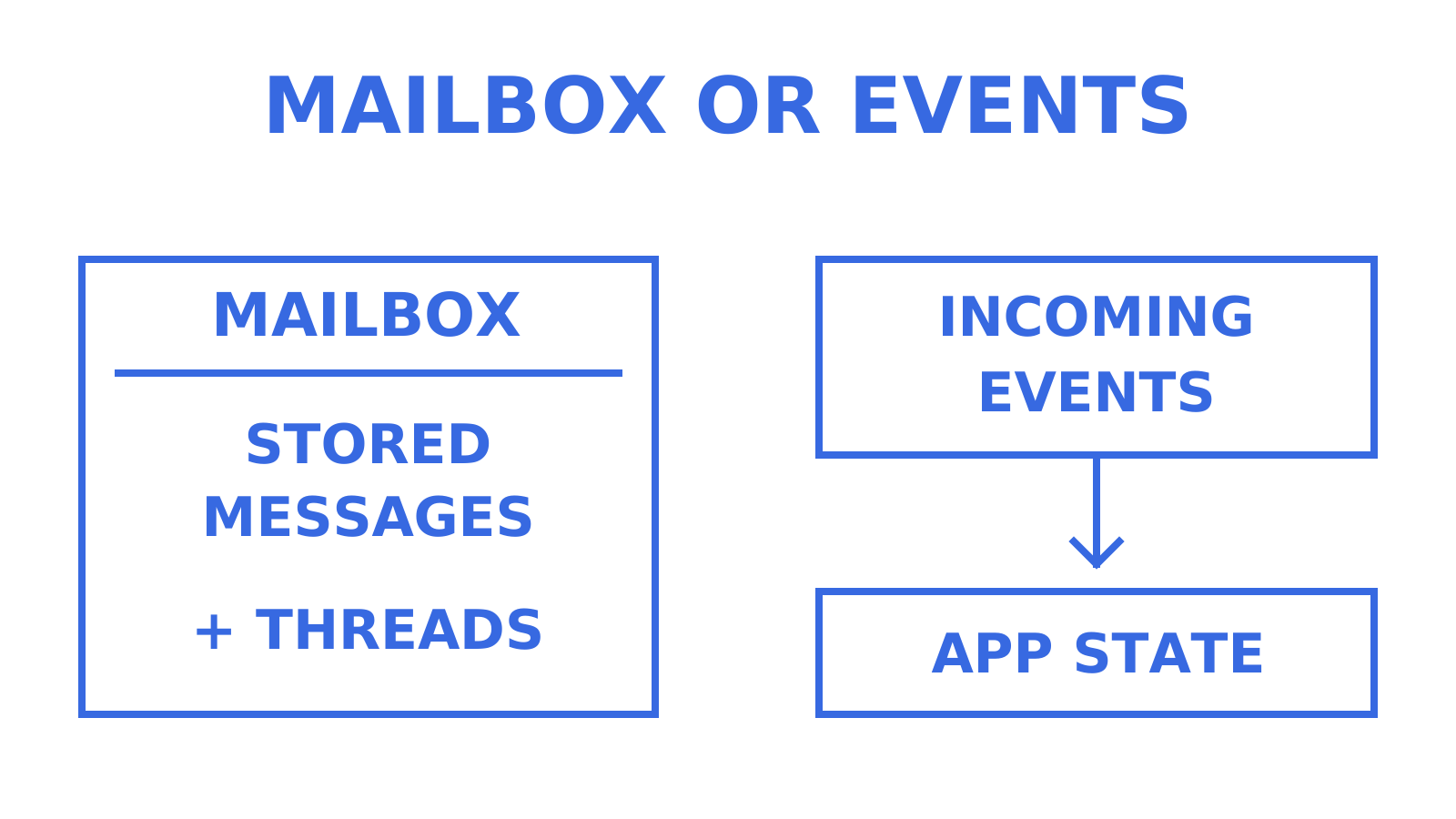
A persistent mailbox keeps message and conversation state available for later requests. That matters when an agent must read replies, follow a thread or resume a workflow. An event-driven integration can support the same application goal, but you must decide who stores the history and how the agent retrieves it.
Sendmux exposes messages, threads, folders, keywords, attachments, sender identities and quotas. Its cleaned-content endpoint removes quoted history from the text an agent reads. Original text or HTML message bodies remain available separately. Those body formats shouldn't be described as the original raw MIME message.
Sync endpoints let an agent request changes using a prior state token. Folder and query operations have their own documented scope. Test how your client handles an invalid or expired state instead of assuming every token can be used with every query.
Polling costs depend on the number of active inboxes and the interval. Before committing to a provider, compare your proposed request volume with its published limits and test a representative workload. A hypothetical allowance of 1,800 requests per minute wouldn't accommodate ten thousand inboxes polled every few seconds. That is a capacity example, not a claimed limit for any provider here.
How does outbound routing affect the choice?
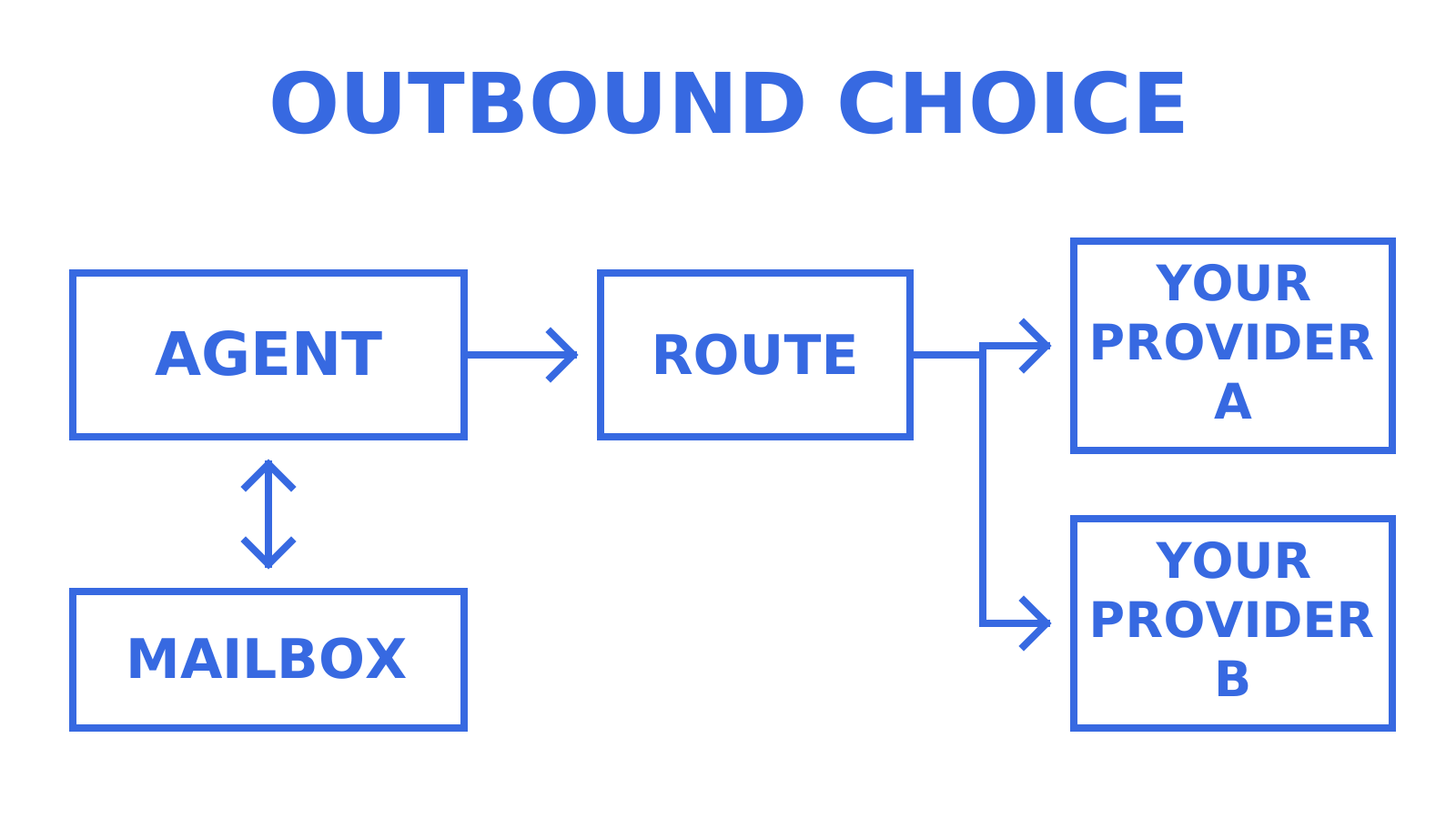
Single-provider sending gives you one provider integration to operate. Managed sending reduces account setup. Bring-your-own routing lets you connect accounts you control and select among them, subject to their quotas and sending policies. Choose the model that fits your ownership and operational needs.
Sendmux delivery groups support weighted routing and failover across connected sending accounts. Quota and health checks affect which accounts can send. A provider outage and a rejected recipient aren't interchangeable failures, so test the actual fallback behaviour before relying on it.
Owning a sending account gives you account-level control. It doesn't guarantee a dedicated IP, independent reputation or inbox placement. Providers can use shared infrastructure, and authentication, consent, message quality and complaints still affect delivery.
How should you choose an AgentMail alternative?
Compare mailbox persistence, outbound ownership and total cost against your own workload. Thousands of lightly used inboxes can make a per-inbox charge significant, but usage pricing isn't automatically cheaper. Storage, message volume, included allowances and your provider's charges all affect the comparison.
Write down the capabilities you need before building a pilot. The broader marketing automation checklist covers compatibility review and phased rollout. For agent email, extend that checklist with mailbox state, credential scope and outbound routing tests.
- Ask for the storage limit per mailbox, the retention policy and the behaviour when a limit is reached.
- Check the documented webhook signature algorithm, headers and verification procedure. Test a bad signature as well as a valid event.
- Check whether credentials can be restricted to one mailbox and to the required operations. Separate read access from permission to send.
- Confirm sending quotas by second, minute, hour and day where applicable. Distinguish your provider's limits from the platform's limits.
- Check delivery-log and webhook-attempt retention against the period your support team needs for an investigation.
Developer tooling affects the work your team must own. Review the OpenAPI specification, SDK coverage, CLI and MCP support, then try the operations your agent actually needs. Missing tooling creates integration work, but it doesn't support a universal estimate of how many days or weeks that work will take.
Treat missing controls as requirements gaps. If your workflow needs thread history, scoped credentials or a specific compliance certification, verify those before adopting the service. Request a current certification report where one is required. A sales-led price or a missing SDK is a trade-off to evaluate, rather than proof a product is unsafe.
How can you pilot and migrate safely?
Start with a subset of consenting users or tenants, verify authentication, and keep a working return path to the current provider. Check SPF, DKIM and DMARC alignment for the sending domains. DNS mistakes are one possible delivery problem, alongside reputation, content, consent and provider policy.
Where supported, move a small share of traffic using routing weights. Keep the previous account available and verify that restoring its route works. Monitor bounces and complaints during the first 72 hours and afterwards. The 5% bounce-rate discussion needs a provider-specific interpretation: AWS recommends keeping SES hard bounces below 2% for best results and puts accounts under review at 5% or greater. It recommends a complaint rate below 0.1%. Those aren't universal safe limits or a promise that Sendmux uses the same enforcement policy.
A 30 to 90 day pilot can reveal how storage and operational work change with real traffic. Measure incoming-message latency, sending-account bounce and complaint rates, and stored data per active mailbox. Treat that duration as a planning suggestion, not a measured requirement. The inbox setup guide provides more context for mailbox setup and integration.
Where does Sendmux fit?
Sendmux fits teams that want new agent mailboxes and customer-controlled outbound routing in one product. Incoming-message workflows can use signed HMAC-SHA256 webhooks or Server-Sent Events. Message queries support filters such as folder, sender, date range and attachment presence, so an agent can retrieve a narrower result set.
Access depends on the credential and its granted permissions. Team-level infrastructure access, mailbox-scoped keys and approved agent access serve different purposes. Self-registration doesn't authorise sending: the human owner must accept the invitation and approve that access. Check each operation's scope instead of treating every credential as interchangeable.
Sendmux has public OpenAPI specifications, SDKs for TypeScript, Python, Go, PHP, Ruby and Rust, a CLI and hosted MCP support. Tool availability doesn't prove that every client supports every operation. Check the current integration documentation for the client you're using.
Sendmux doesn't provide email warmup, a campaign builder or sequencing. Existing Gmail and Outlook inbox access is a separate requirement from connecting those accounts for outbound sending. Check the current roadmap and security documentation for drafts, enterprise SSO and certification requirements rather than inferring support from the presence of an email API.
What does Sendmux cost for agent mailboxes?
Free costs US$0 per team per month and includes two mailboxes and one connected sending account. Its US$1 opening credit is consumed by usage, and outbound sending is limited to 50 accepted recipients per UTC day. Free can't top up. More credit or capacity requires Pro.
Pro costs US$7 per team per month plus usage, with no separate per-mailbox fee. On your own sending providers, Sendmux charges US$0.000500 per provider-accepted recipient. Each accepted occurrence counts, including the same address repeated across To, CC or BCC. Inbound mail costs US$0.000500 per distinct mailbox delivery, and storage costs US$0.02 per decimal GB-month. Your own sending provider's charges are separate. Managed sending costs US$0.000750 per accepted recipient.
That billing shape can suit many lightly used mailboxes, but it doesn't make storage free or guarantee the lowest bill. Estimate actual usage before comparing it with a plan that includes inboxes and messages. Check the current pricing page and the inbound mailbox product page before starting a Free team and provisioning your first mailbox.
Frequently Asked Questions
What is the best AgentMail alternative for persistent agent mailboxes?
Sendmux is one option for persistent agent mailboxes with bring-your-own multi-provider outbound routing. It has no separate per-mailbox fee, but plan limits, message usage and storage charges still apply. Compare those requirements with the other providers before choosing.
Do I need mailbox persistence, or is a send-only API enough?
If your agent needs reply history or conversation state, decide whether the provider or your application will store it. Sendmux and Nylas offer mailbox resources. Resend and Postmark also support inbound workflows, so evaluate their retrieval and retention features rather than labelling them send-only.
How much does Sendmux cost compared to per-mailbox pricing?
Sendmux Free costs US$0 per team per month with fixed limits. Pro costs US$7 per team per month plus usage, with no separate per-mailbox fee. Own-provider sending costs US$0.000500 per provider-accepted recipient, inbound mail US$0.000500 per distinct mailbox delivery, and storage US$0.02 per decimal GB-month. Provider charges are separate.
What should I ask a vendor before piloting an agent email provider?
Ask about mailbox storage and retention limits, webhook signatures, credential scope, and provider-side sending quotas by second, minute, hour and day where applicable. Check delivery-log retention and test the permissions your agent actually needs.
Is Amazon SES a replacement for AgentMail?
Amazon SES provides sending and receiving infrastructure, including reputation metrics. It can form part of an agent email system, but your application must configure incoming-message processing and any persistent mailbox or conversation state it requires. It is not a drop-in replacement for every AgentMail workflow.
