Avoid Vendor Lock In: 4 TypeScript Email API Options


For most TypeScript projects, the right move is a typed unified SDK with provider adapters, unless your app needs persistent, agent-readable mailboxes, in which case a mailbox-first API is the better fit. Start by installing a typed client for your chosen approach and running its quickstart against a sandbox or test adapter before you touch production credentials.
Shortlist: the main TypeScript-friendly API approaches
Four patterns cover almost every integration a TypeScript team will hit this year, and each trades off differently on portability, speed and control.
- Typed unified SDKs: one message shape across providers, with adapters doing the translation underneath. Best for teams who expect to switch or multi-home providers and want type safety on the way in and out.
- Provider-specific TypeScript SDKs: fastest path to a provider's native features (templates, analytics, suppression lists), at the cost of a rewrite if you ever migrate.
- Adapter or driver libraries: lightweight, often zero-dependency clients built for Bun, Deno and edge runtimes like Cloudflare Workers, where a heavy Node SDK will not run cleanly.
- Mailbox-first APIs: give you a real, persistent inbox with threading and inbound parsing rather than just an outbound pipe, which matters for support bots, AI agents and any workflow that needs to read replies, not just send messages.
The typed unified SDK approach, exemplified by the Email SDK project, ships a single client and dozens of adapters so email.send() keeps the same signature no matter which provider is behind it. Adapter libraries such as unemail go further, unifying multiple providers in a zero-dependency, cross-runtime package built for strict TypeScript. If your product's job is reading and routing mail, not just firing it off, a mailbox-first API changes what "email integration" even means, and that distinction drives the rest of this guide.
How to choose: a developer checklist and evaluation order
Run through these checks in order. Each one eliminates options faster than reading a features page top to bottom.
- First-class TypeScript types. Request and response shapes should be typed natively, not bolted on with
anyor community.d.tsfiles.
- Runtime compatibility. Confirm the SDK runs on your actual runtime, Node, Bun or Deno, and check its ESM versus CommonJS story against the TypeScript handbook's tsconfig guidance, since module resolution settings decide whether an import even resolves.
- Test tooling. Look for sandbox inboxes, no-network test adapters or CLI dry-run commands you can wire into CI without hitting a real provider.
- Inbound support. If you need to receive mail, check for typed webhook payloads, raw-body access for signature verification and documented signing behaviour.
- Provider portability. Count the adapters on offer and estimate migration cost if you ever need to leave your first provider.
- Operational visibility. Confirm delivery logs, retry semantics, idempotency keys and webhook events for bounces and complaints exist somewhere you can query.
- Cost model fit. Work out whether pricing is per message, per mailbox or usage-based, and map that against your actual traffic shape before committing.
Pro Tip: Rotate API keys on a schedule rather than waiting for a breach; a short note on key expiry practices is worth five minutes before you wire credentials into a CI pipeline.
Runtime compatibility trips up more teams than any other item on this list. An SDK built for Node's CommonJS resolution can throw confusing import errors under Bun or a strict ESM tsconfig.json, and that failure mode is exactly what the TypeScript handbook is written to help you avoid before you commit to a client library.
Implementation patterns and TypeScript examples
A stable message DTO is the single decision that makes everything else easier. Define your own EmailMessage type once, map it to whatever the provider or adapter expects internally, and your application code never has to change when the provider does.
- Typed client construction. Instantiate your client or adapter with a typed config object, and keep provider-specific options behind an adapter boundary so swapping providers means changing one constructor call, not every call site.
- Runtime-safe imports. Use conditional imports or a runtime check (
typeof Bun !== "undefined") where an SDK behaves differently across Node, Bun and Deno, and confirm your module setting intsconfig.jsonmatches what the package actually ships, per MDN's guide to import declarations.
- Webhook handling done safely. Capture and store the raw request body before you touch it. Verify the signature against that raw body first, and only parse it into your typed payload after verification succeeds. Parsing before verifying is a common source of webhook security failures, as outlined in Hookdeck's guide to Postmark webhooks.
- Testing with real fixtures, not live sends. Wire a no-network test adapter or sandbox mailbox into your test suite, mock the typed response shape rather than the HTTP layer, and assert on your own DTO fields so tests stay valid across provider swaps.
- Typed error handling. Model failures as a discriminated union or a result object (
{ ok: true, data } | { ok: false, error }) instead of throwing untyped errors up the stack. This forces callers to handle send failures, rate limits and validation errors explicitly, and it reads far better in a TypeScript codebase than a chain oftry/catchblocks guessing at error shapes.
Idempotency keys deserve a specific mention: attach one to every send call so a retried request after a timeout does not duplicate a message, a detail that matters more once you are batching sends rather than firing one email at a time.
Sendmux as the mailbox-first TypeScript option
When the job is not just sending mail but reading, threading and routing it, Sendmux is built specifically for that shape of problem. It ships typed SDKs and OpenAPI 3.1 specifications across both its Mailbox and Sending surfaces, so request and response shapes are typed before you write a line of integration code.
- Persistent mailboxes with threading. Every agent, customer or workspace gets a real inbox with cleaned message text, stripped quoted history and thread-aware headers, plus Server-Sent Events or signed HMAC-SHA256 webhooks for real-time inbound flow.
- Bring-your-own-provider routing. Route outbound through Gmail OAuth, Microsoft 365, custom SMTP or a managed Amazon Simple Email Service account, with per-provider quotas, health checks and failover handled for you.
- Delivery visibility. Logs record status, provider and attempt count per message, filterable and exportable, which matters once you are debugging a send failure at 2am.
- Scoped credentials. Mailbox keys, agent tokens and infrastructure keys carry distinct permissions, and provider credentials are encrypted, which suits multi-tenant apps issuing one mailbox per customer.
The Mailbox API guide walks through threading and inbound parsing in more depth if that is the piece you are evaluating.
Where to start
If you are building greenfield, start with a typed unified SDK, or Sendmux if your product needs to read mail as well as send it, not just because it is easier today but because it keeps your options open. Retrofitting portability into a codebase wired directly to one provider's SDK is a much bigger job than adding an adapter layer up front.
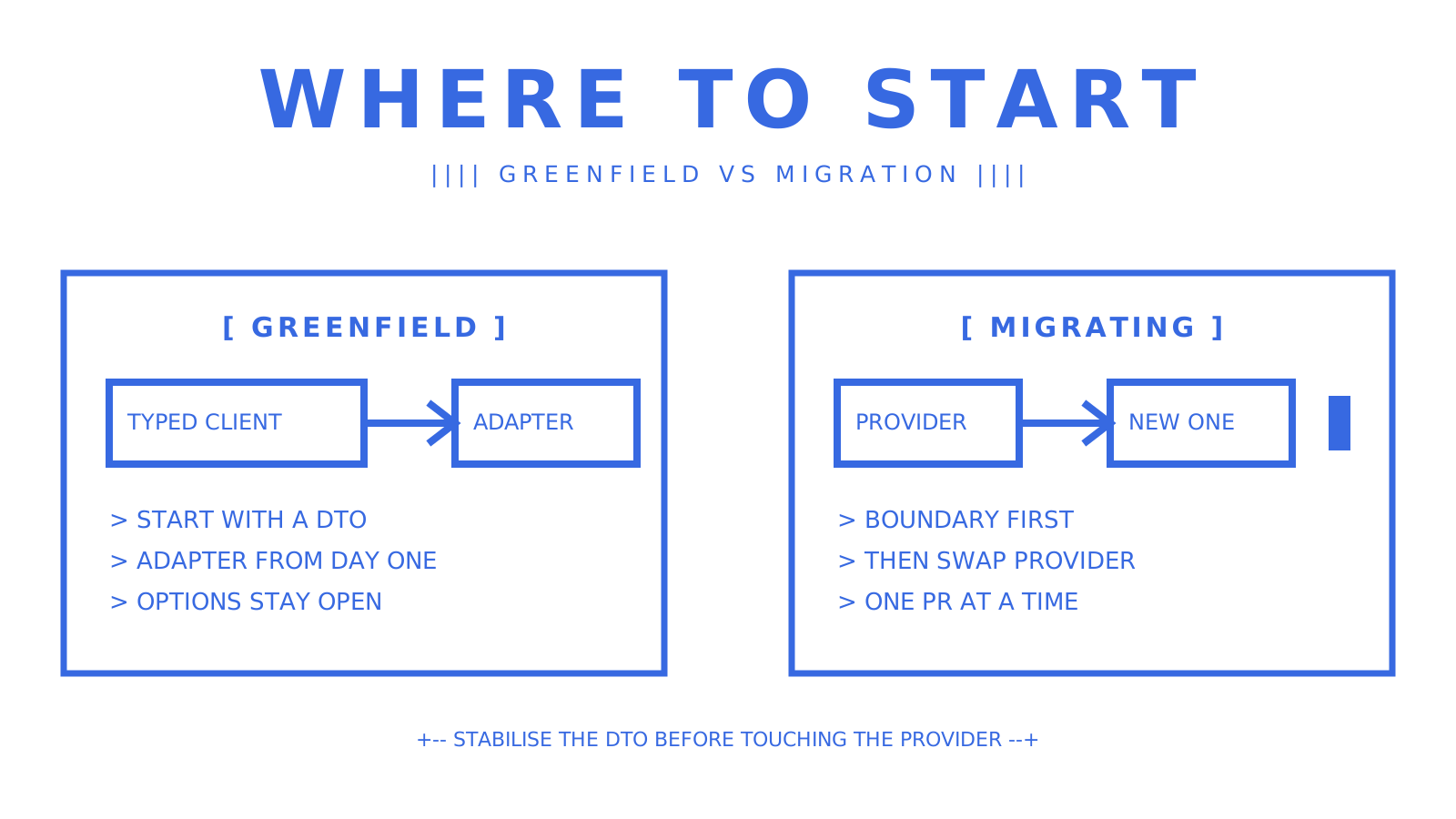
If you are migrating an existing integration, do not try to swap providers and refactor your message handling in the same pull request. Introduce an adapter boundary first, get your DTO stable, then change providers behind it.
Either way, the cheapest insurance is a test adapter and a handful of type-safe tests wired into CI before you ship. It catches the failure mode that actually happens, a provider changing a response shape underneath you, months before a customer does.
Try Sendmux: typed SDKs and mailbox APIs, ready now
Sendmux gives TypeScript teams a mailbox-first API with typed SDKs, OpenAPI specs and provider failover in one place, so you are not stitching a sender, a parser and a webhook relay together yourself.
- Start on the Free plan at no cost per month per team, or move to Pro at a paid plan plus usage once you outgrow it.
- Explore the sending API with provider failover or the inbound mailboxes product depending on which side of your integration you're building first.
- Check pricing for the full usage rates before you commit traffic to any plan.
Authoritative docs and repos to read next
Start with the TypeScript handbook's tsconfig documentation for module resolution, then the Email SDK docs for the typed unified client pattern. For a zero-dependency, cross-runtime approach, read through unemail on GitHub, and for sending-via-API patterns more broadly, see this developer guide to sending email via API.
Sources
Frequently Asked Questions
What is the best email API for TypeScript projects?
There is no single best option: a typed unified SDK such as the Email SDK suits teams that want provider portability, while a mailbox-first API suits products that need to read and thread inbound mail, not just send it. Pick based on whether your workload is outbound-only or needs persistent inboxes.
How do I handle TypeScript email webhooks securely?
Store the raw request body before parsing it, verify the provider's signature against that raw body, and only then parse it into a typed payload. Parsing before verification is a common cause of webhook security failures, as covered in Postmark's webhook guidance.
Does Sendmux work with Node, Bun and ESM?
Sendmux publishes TypeScript SDKs alongside OpenAPI 3.1 specifications for its Mailbox and Sending APIs, and runtime compatibility should always be checked against your own `tsconfig.json` module settings using the TypeScript handbook. Full plan and pricing details are on the Sendmux pricing page.
Can I switch email providers without rewriting my TypeScript code?
Yes, if you build behind an adapter or use a unified SDK with a stable message DTO from the start. Libraries such as unemail and the Email SDK are built specifically to keep your send calls the same while the provider underneath changes.
